
This fresh milled flour sandwich bread is soft, sliceable, and perfect for everyday sandwiches. While baking with 100% fresh milled wheat flour can feel intimidating, this recipe walks you through the process step-by-step so you can bake fluffy homemade sandwich bread with freshly milled grains.
If you grind your own flour at home, this easy recipe will help you create bakery-style sandwich bread that is nutritious, flavorful, and perfect for toast or sandwiches.
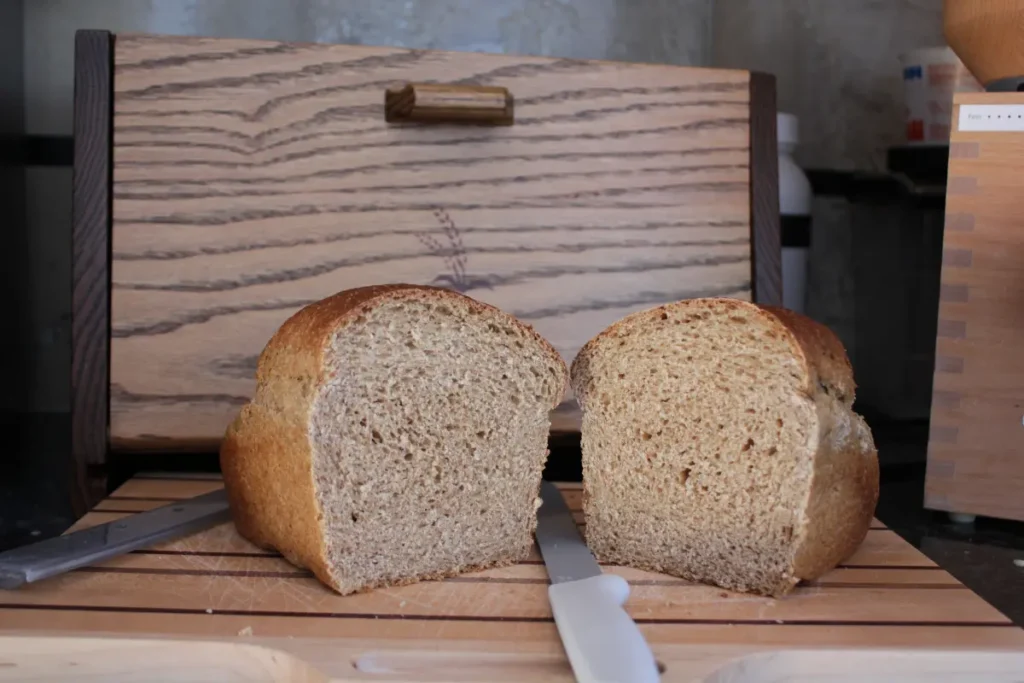
What is Fresh Milled Flour
Simply put, it is flour that is milled from wheat berries immediately before use. There are a variety of berries that you can use when baking or cooking with fresh milled flour. Some examples include hard white, hard red, rye, or spelt. You can also grind ancient grains such as kamut or einkorn. While you can purchase fresh milled flour, most people have a counter top mill to grind the berries into flour at home.I have a KoMo but also know that Mockmill is popular.
Why Use Fresh Milled Flour
There are many reasons people venture into using fresh milled flour. Here are just a few of the main ones.
- Nutrition: fresh milled flour is considered far more nutritious than all purpose flour.
- Freshness: When you mill your own flour at home you are getting the freshest of the fresh. Often times all purpose flour can sit on the shelf for months and months.
- Taste: Fresh milled flour has a far superior taste. It is richer, sweeter, and slightly nutty.
- Digestion: There are some people that say home milled flour is easier to digest than all purpose flour.
Why You’ll Love This Fresh Milled Sandwich Bread
- It is made with 100% fresh milled flour
- Beginner friendly recipe
- Soft bread great for sandwiches and toast
- No sifting needed! You are using all of the wheat berry
- Simple pantry ingredients
- Step by step instructions with photos
- Slightly sweet so even kids will like it
Ingredients for Fresh Milled Flour Sandwich Bread
- Fresh Milled Flour: I use a mix of hard red wheat, hard white wheat, and spelt.
- Water
- Olive oil: the fat helps to create a slightly softer loaf of bread
- Buttermilk: also helps create a more tender loaf while also giving the bread a slightly tangy flavor
- Honey: food for the yeast, and helps the loaf brown due to sugar caramelizing
- Eggs: helps to create a richer dough
- Salt: for flavor
- Yeast: so the bread will rise
How to Make Fresh Milled Flour Sandwich Bread
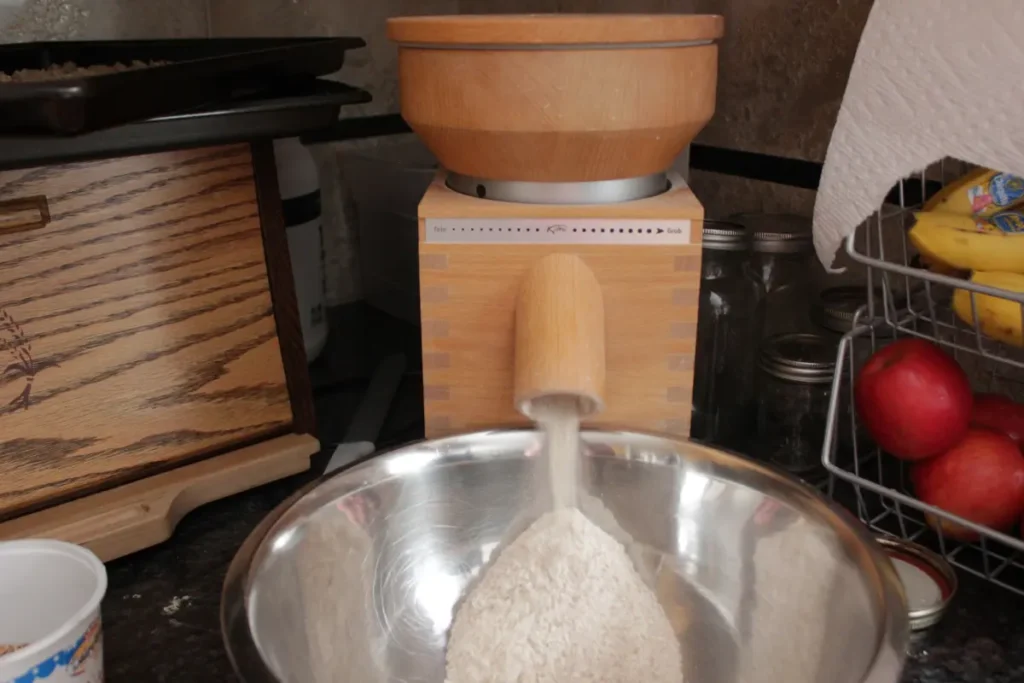
Mill the wheat berries
The great thing about this recipe is that there is no sifting involved. Simply measure out your berries and mill and a fine setting.
Autolyse
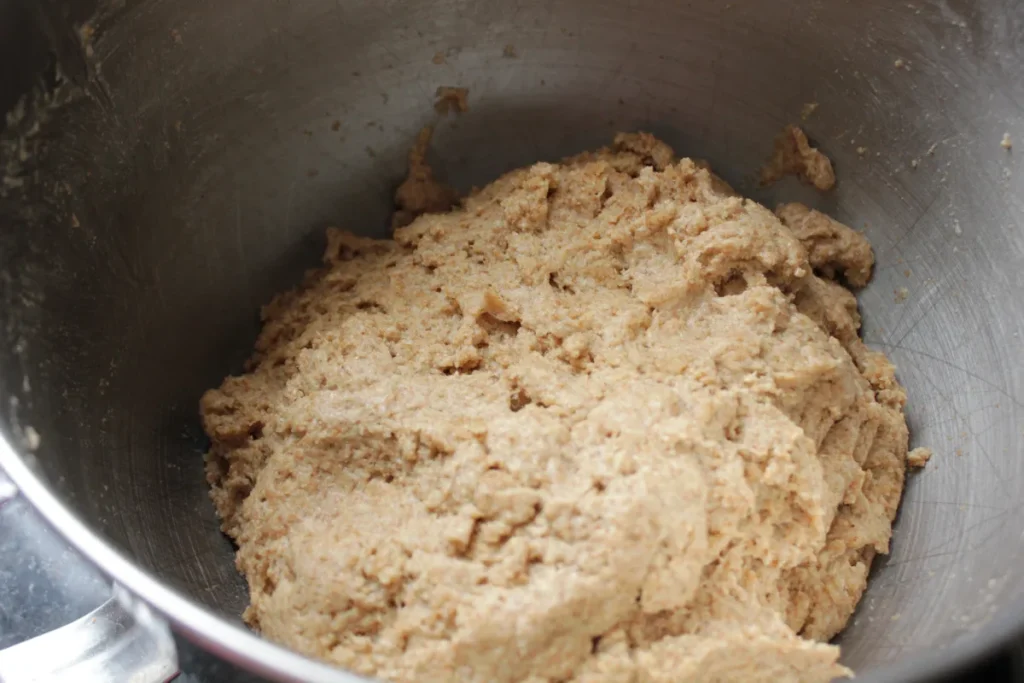
Just like in my sourdough bread, this fresh milled sandwich bread needs an autolyse step. After milling your berries mix all the ingredients except for the yeast and salt. Autolyse for 45 minutes- an hour.
Add the salt and yeast
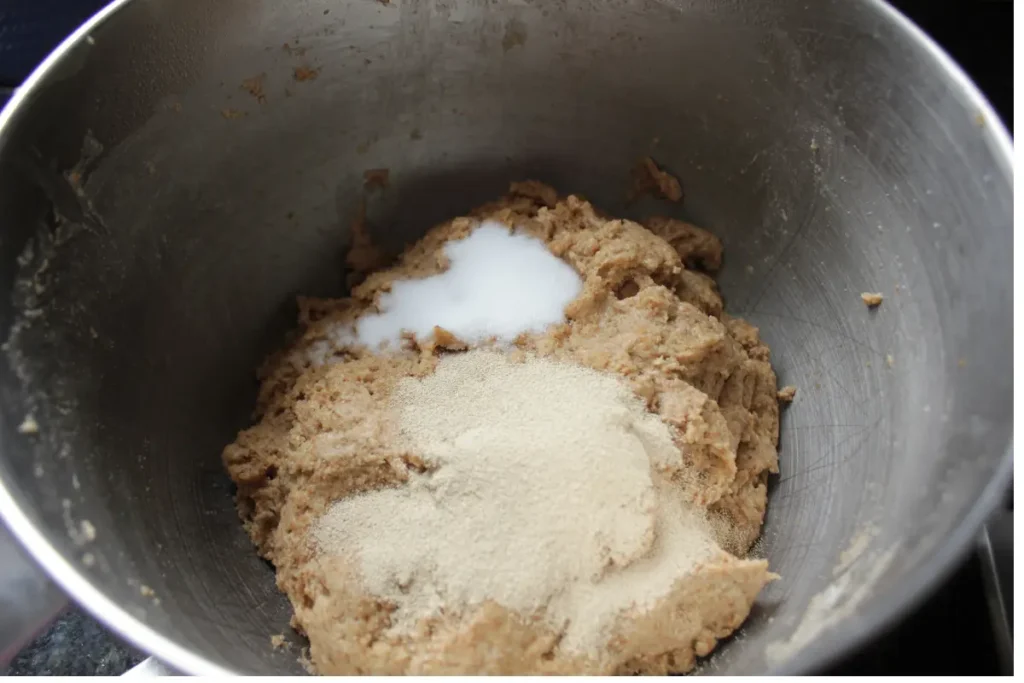
After the dough has sat for about an hour add the salt and yeast. You can use either instant or active dry yeast.
What Yeast To Use
Back in the day you had to put active dry yeast in water to “wake it up” before using. That really isn’t the case anymore. Active dry yeast is finer than it was years ago, and can simply be added into your baking. I found this to be a game changer.
Knead
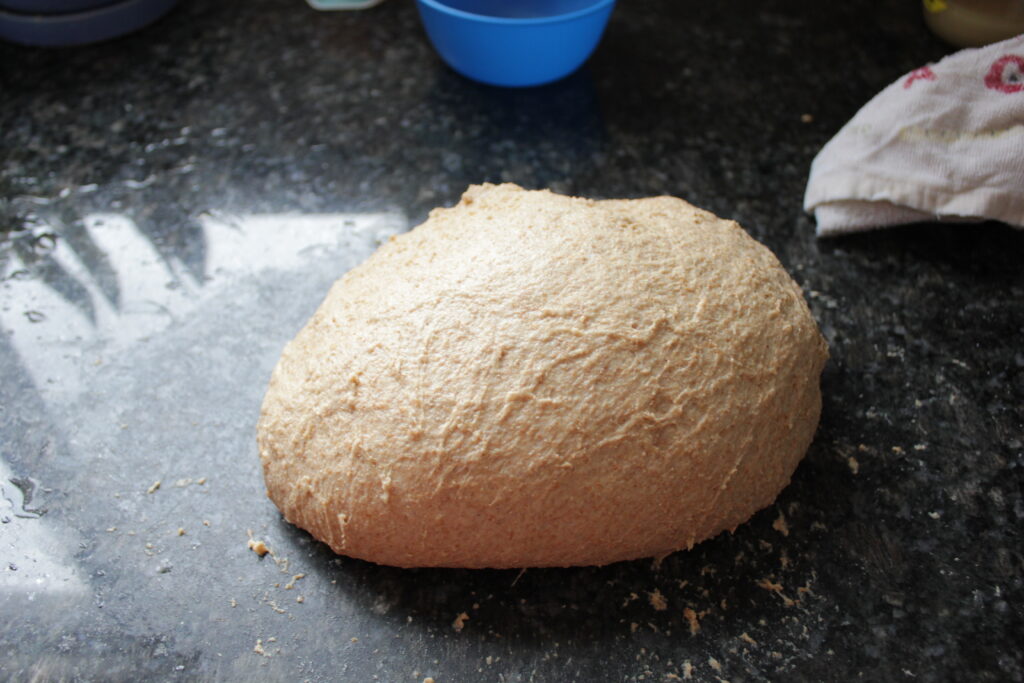
Knead the dough in a stand mixer or by hand for 3-5 minutes. This dough will not pass the windowpane test, as it uses fresh milled flour. The dough will not be smooth, and will be a little sticky.
Let rise
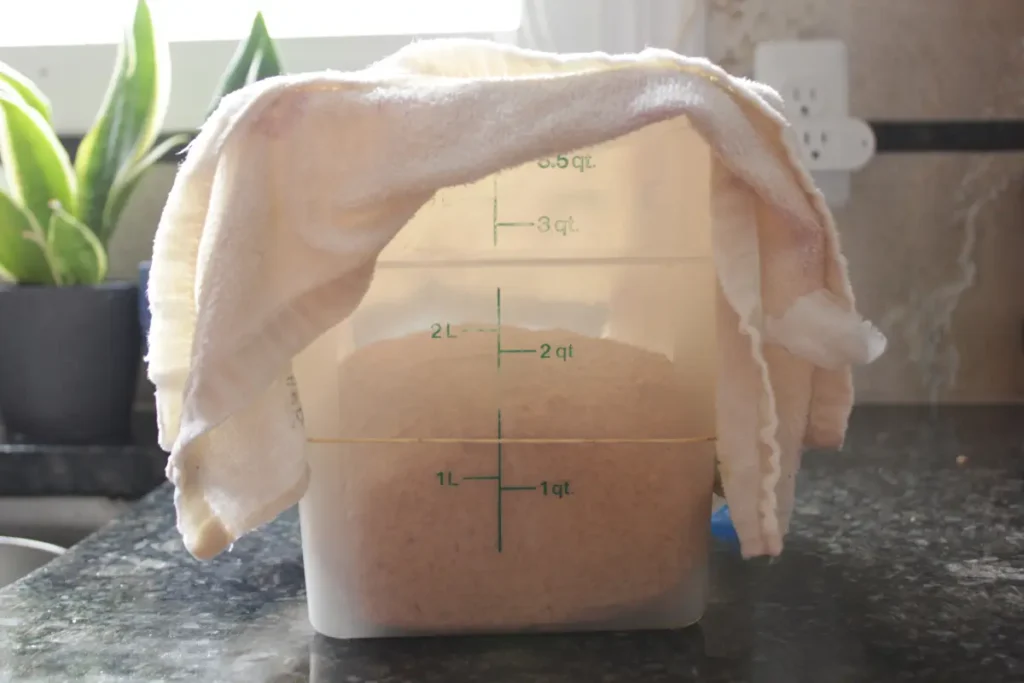
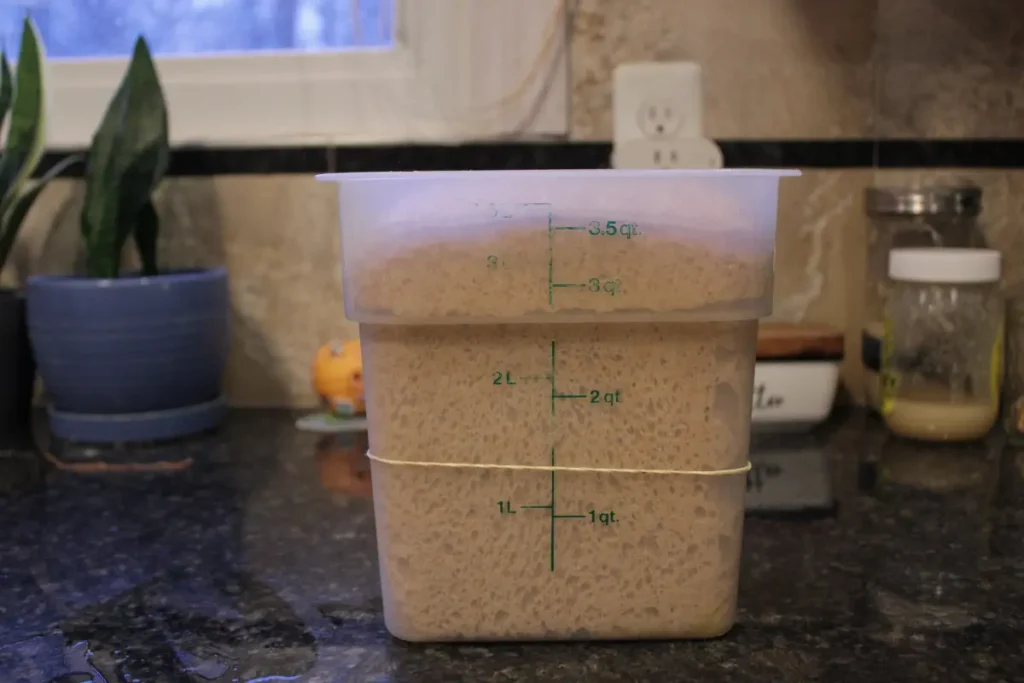
Allow the dough to double. This will take between 1-3 hours. As you can see in the pictures below this dough rose just a little bit above double ( I was multitasking and forgot about it… oops). But I wanted to show that it’s ok if things don’t go exactly as planned. Don’t give up, and keep going.
Shape
After the dough is done rising, remove to a counter. Split the dough in half and shape each into a loaf. To do this I gently stretch it into a rectangle, then fold the top down, and the bottom up. Then I roll from the opposite side. Transfer these to greased loaf pans.
I didn’t let them rise quite as much as a normally do during the second rise since the first rise went a little long.
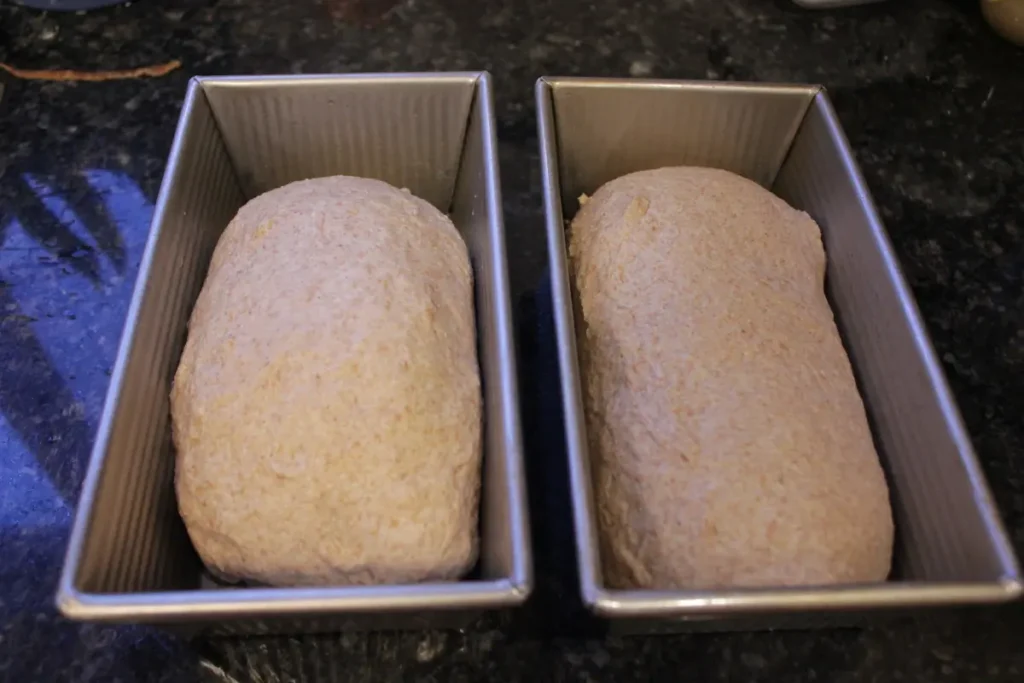
Second rise
Now it is time for the second rise, which should only take 30 minutes to an hour. You want the dough to be just barely above the top of the pan. Preheat your oven to 350℉ while they are rising.
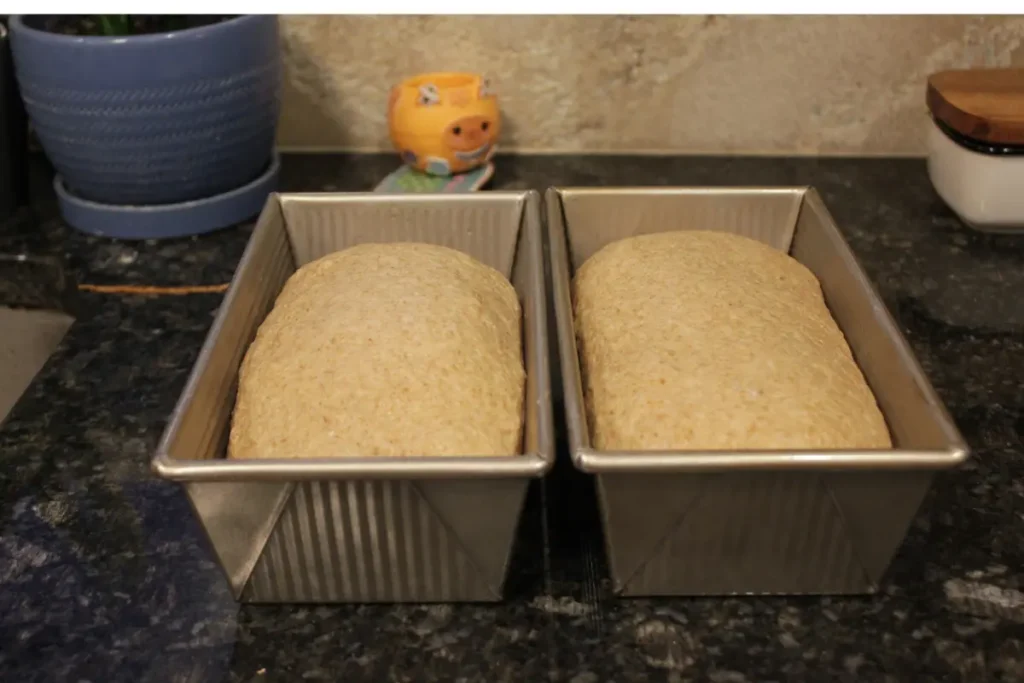
Bake
Bake the loaves for 45 minutes. Allow the bread to cool completely before slicing.
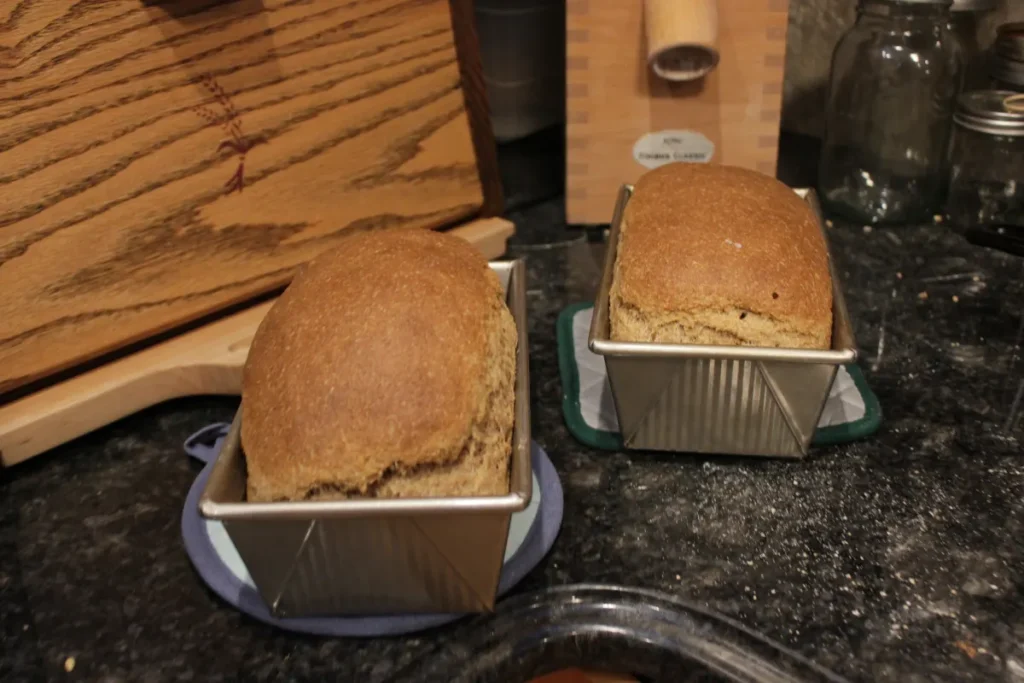
While everyone loves a good sandwich bread, sometimes a crusty sourdough bread really hits the spot. If you are looking for a happy medium, then take a look at this crusty sourdough discard bread, which uses little bit of yeast for a same day loaf.
Tips for Baking Fresh Milled Sandwich Bread
Don’t skip the autolyse
I know it’s tempting to pass this step, but don’t do it. Fresh milled flour needs extra time to absorb liquid. This is particularly true when you are using a full inclusion flour, meaning you haven’t sifted any bran out. This short rest before adding yeast helps improve gluten formation.
Expect a stickier dough
Once again, because of how fresh milled flour absorbs water it will feel stickier than a dough made with all purpose flour. Try very hard not to add extra flour in while kneading.
Use hard wheat berries
You can’t use soft wheat berries when baking bread, as they don’t have the proteins needed to create strong gluten. Use hard wheat berries (red or white) to insure the bread has the protein needed.
Don’t expect a all purpose flour bread
You will not get the same loaf of bread with fresh milled flour as you do with all purpose. If you go into it thinking you are going to get a super fluffy, white loaf of bread you will probably be disappointed. While this recipe does create a soft bread that is great for sandwiches, it’s not an all purpose loaf of bread. What you may be lacking in “fluffyness” you well make up for in taste.
Questions about 100% Fresh Milled Flour Sandwich Bread
Why won’t my dough pass the window pane test?
It is very difficult to have dough with fresh milled flour to pass the windowpane test. When you use fresh milled flour, you are using all of the wheat berry including the bran. That bran acts like little knives in your dough, cutting into gluten strands making a window pane test difficult.
Can I use soft wheat?
No, soft wheat won’t really work in this recipe. When using fresh milled hard wheat is usually the go to for bread due to it’s higher protein content. Save the soft wheat for items like my chocolate chip cookies or banana muffins.
Do I really need to autolyse?
Yes, you really do need to autolyse. Allowing the flour to rest with the liquid ingredients helps to hydrate the dough, and begins to form the gluten strand. Hydrating the dough helps prevent the bran from cutting through those gluten strands giving you a better rise.
Why is my dough sticky?
First off, don’t add more flour yet. Fresh milled flour absorbs liquid slowly (which is why we autolyse). This slow absorption often makes the dough sticky. If the dough feels sticky, lightly wet your hands with water or olive oil before continuing to knead.
Why do you measure in grams?
Until I started milling my own flour I measured ingredients using cups. Once I started baking my own bread I realized how inconsistent that is. A cup of flour could weigh 120 grams-180 grams depending on how you fill it. Do you just scoop the measuring cup in your flour bag, or do you spoon it in? Having the correct amount of flour is important, particularly when baking bread. Too much flour can cause a dense loaf that doesn’t rise well.
What are the best berries for fresh milled sandwich bread?
Overall you want to choose a hard wheat berry. These are higher in protein and gluten, which is needed when making bread. I included a little bit of spelt in my recipe to add some sweetness, but this also reduced gluten a little. I encourage you to play around with different berries, just keep gluten and protein in mind.
Can I freeze fresh milled sandwich bread?
Absolutely! I have to freeze my loaves since we won’t eat a whole one before it gets stale. I simply cut my loaves in half, place them in a zip-lock freezer bag, and freeze.. When I notice we need more bread I take the zip-lock bag and defrost it in the bag in my bread box. This usually takes a few hours, so I try to do it the night before. Once it is defrosted I take it out of the bag and store it in my bread box.
How long does this sandwich bread last?
Because it contains no preservatives, fresh milled bread usually stays fresh for 2–3 days at room temperature. It is still usable after three days, but will start to get a little stale.
Why is my fresh milled sandwich bread dense?
First, remember that fresh milled bread will be denser than bread made with all purpose flour. The bran and germ in the grain can get in the way of gluten development, which, in turn can cause the bread to have a tighter crumb.
But, if you still feel your bread is too dense then it either wasn’t given enough time to rise, or too much flour was added while kneading.

Fresh Milled Flour Sandwich Bread
Ingredients
Method
- Start by milling the berries. There is no need to sift any of the flour. This recipe uses 100% inclusion flour.
- Mix flour, water, oil, buttermilk, honey, and eggs together and allow to autolyse for one hour.
- After the hour add in salt and yeas and mix in a mix with a dough hook (or knead by hand). This dough is a little stickier than others and doesn't take a long time to knead, 5 minutes or less.
- Once the dough is kneaded allow to rise until doubled. This could take anywhere from 1-3 hours depending on the room temperature.
- After it has doubled dump the dough onto your counter and split in half. Form a loaf by folding the dough over on itself then rolling it tightly. Place each loaf into a greased loaf pan.
- Cover with a tea towel and allow to rise until the dough is just barely above the top of the pan. While it is rising preheat your oven to 350℉.
- After the dough has risen bake for 45 minutes.
- Remove from oven and allow to cool slightly in the loaf pan, then transfer to a cooling rack.
- Allow bread to cool before slicing.
